Nasal Scope Procedure Explained: What You Need to Know
If you or a loved one has been advised to undergo a nasal scope procedure, it is perfectly natural to have questions or concerns. In this article, let’s guide you through the process step by step.
The nasal scope—also known as nasoendoscopy or nasal endoscopy—is a routine, safe, and valuable tool for diagnosing and managing a wide range of nasal and sinus conditions.
What is a Nasal Scope Procedure?
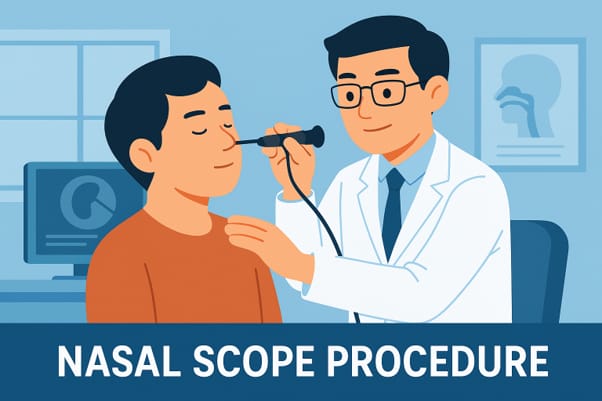
A nasal scope procedure is a quick and minimally invasive examination that allows your ENT doctor to look directly inside your nasal passages and the upper part of your throat. This is done using a thin, flexible or rigid tube called a nasoendoscope, which is fitted with a tiny camera and a light at its tip.
With this technology, we can visualise the intricate structures of your nose and sinuses in real time, helping us identify issues that would be missed with external examination alone.
The nasoendoscopy has become an essential part of modern ENT practice. Unlike older methods that offered only limited views, the nasal scope procedure provides detailed images, allowing for a more precise diagnosis and targeted treatment.
When Is a Nasal Scope Procedure Recommended?
Common Clinical Indications
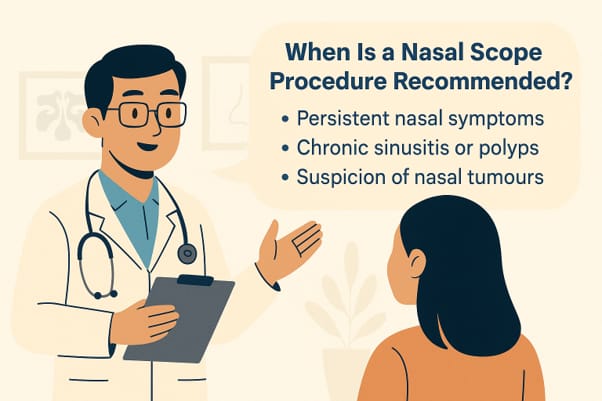
There are several reasons why you may be referred for a nasal scope. Most commonly, it’s because you have ongoing symptoms that have not responded to basic treatments. These may include persistent nasal congestion, frequent nosebleeds, unexplained loss of smell, or chronic sinus infections.
The nasal scope procedure is also used if your doctor suspects polyps, tumours, or structural problems within your nasal passages.
Special Situations
Nasoendoscopy can be crucial when investigating more serious conditions, such as suspected cancers of the nose or throat. It is also helpful for assessing nasal injuries, investigating causes of snoring, or planning for surgery.
If you’ve had sinus surgery in the past, we may use the nasal scope for routine follow-up, ensuring proper healing and monitoring for any recurrence of disease.
Preparing for the Nasal Scope Procedure
What to Expect Before the Procedure
Preparation for a nasal scope procedure is straightforward and does not require fasting or any major changes to your routine. Before starting, the ENT specialist will ask you about your symptoms, medical history, and any allergies, particularly to anaesthetic sprays.
It’s important to let your doctor know if you are taking blood-thinning medications, have had recent nosebleeds, or suffer from significant anxiety about medical procedures.
Comfort Measures and Anaesthetic
To ensure the procedure is as comfortable as possible, a topical decongestant and a local anaesthetic spray are usually applied to the inside of your nose. The decongestant helps to open up the nasal passages, while the anaesthetic numbs the area. You might feel a mild stinging or bitter taste at first, but this wears off quickly.
The Nasal Scope Procedure: Step by Step
Step 1: The Setting and Position
Nasal scope procedures are typically carried out in the outpatient clinic. You will be seated in an upright position, and the procedure is performed while you are fully awake. There’s no need for sedation or general anaesthesia, so you can go home straight afterwards.
Step 2: Using the Nasoendoscope
The nasoendoscope is a slim, sterile instrument, only a few millimetres in diameter. Depending on your specific needs, your ENT specialist may use either a rigid or flexible scope.
Rigid scopes provide crisp images and are usually used for routine assessments, while flexible scopes are more comfortable for certain anatomical variations.
Step 3: Insertion and Visualisation
Once your nose is numb, the endoscope is gently inserted into one nostril and advanced slowly. This is done with great care to avoid discomfort. As the scope moves through the nasal cavity, the doctor carefully examines the septum (the dividing wall between the nostrils), the turbinates (structures that help humidify and filter air), and the openings to the sinuses.
The camera transmits a live, magnified image onto a screen, allowing both the doctor and, if appropriate, the patient to see the internal nasal structures in real time. In most cases, the procedure is repeated for the other nostril.
Step 4: Duration and Sensations
A standard nasal scope procedure typically lasts just a few minutes per side. You may feel slight pressure, a tickling sensation, or the urge to sneeze, but significant pain is rare. Some patients describe it as mildly uncomfortable rather than painful.
What Your ENT Specialist Is Looking For
Key Areas Assessed
During nasoendoscopy, your ENT specialist systematically examines the main anatomical areas within the nose and upper throat. These include the nasal septum, turbinates, sinus openings, the nasopharynx (the space behind the nose), and the back of the throat.
Detecting Abnormalities
The purpose of the nasal scope procedure is to detect abnormalities that may be causing your symptoms. We look for signs of inflammation, infection, polyps, structural deviations, tumours, or bleeding sources. If necessary, tiny instruments can be passed through the endoscope to take biopsies or remove small growths during the same session.
What Happens After the Procedure?

Immediate Aftercare
After a nasal scope, most people can resume their usual activities immediately. You might notice mild numbness or a runny nose from the anaesthetic, but this fades within an hour. A small amount of blood may be present if your nose is very sensitive, but heavy or prolonged bleeding is uncommon.
Safety and Rare Complications
The nasal scope procedure is considered extremely safe when performed by a trained ENT specialist. Complications are rare but can include persistent nosebleeds, local infection, or, very rarely, a reaction to the anaesthetic spray.
If you experience significant pain, heavy bleeding, or signs of infection (such as increasing redness, swelling, or fever), contact your doctor promptly.
Safety and Benefits of the Nasal Scope Procedure
Nasal endoscopy offers many advantages over traditional diagnostic methods. It allows for direct visualisation of areas that cannot be seen with a simple torch or mirror. This leads to more accurate diagnoses and enables your doctor to plan the most appropriate treatment for your condition.
The risks are low, and the benefits—early detection, targeted therapy, and peace of mind—are considerable. For children, special paediatric scopes can be used, making the procedure well-tolerated even for younger patients.
Frequently Asked Questions about Nasal Scopes
Does the Nasal Scope Procedure Hurt?
Most patients find the nasal scope procedure only mildly uncomfortable, not painful. The use of topical anaesthetic greatly reduces discomfort.
How Long Does It Take?
The procedure itself takes just a few minutes, though you’ll spend a little time beforehand having the anaesthetic applied and discussing your symptoms.
Can Children Undergo Nasoendoscopy?
Yes, with proper technique and paediatric equipment, nasoendoscopy is safe and effective for children. Your doctor will use a gentler approach for younger patients.
Can Biopsies Be Taken During the Procedure?
Yes, if your doctor sees an area that needs further analysis, a small biopsy can often be taken at the same time, using specially designed instruments passed through the endoscope.
Conclusion
Feeling apprehensive about a nasal scope is understandable, especially if it is your first time undergoing the examination. Knowing what to expect and discussing your concerns beforehand can help you feel more comfortable.
You do not need to put your questions aside—ask your ENT doctor why the examination is recommended, what you may feel during it, and what happens afterwards.
If you have been advised to undergo a nasal scope in Singapore, approach the appointment as an opportunity to get clearer answers about your symptoms.
Before leaving, make sure you understand the findings, whether further assessment is needed, and the proposed next steps. A clear discussion with your doctor can help you move forward with greater confidence in your care.