Why Does One Side of My Nose Feel Blocked All the Time?
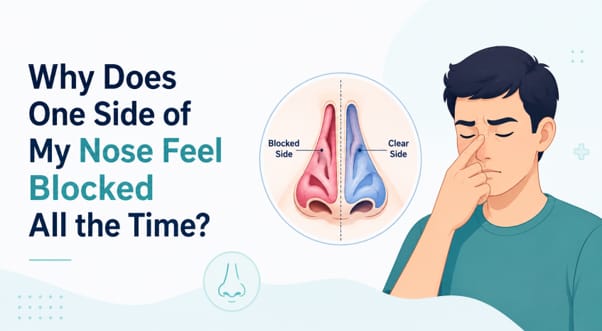
Most people experience a blocked nose from time to time, especially during a cold or allergy flare-up. However, it can be confusing when only one side of the nose feels blocked while the other side seems completely normal.
In some cases, this sensation is harmless and part of the body’s natural breathing cycle. In others, a persistent blockage on one side may indicate an underlying problem that requires attention. The cause can range from simple swelling inside the nose to structural issues that affect airflow.
Understanding what may be causing the blockage is the first step towards finding relief. In this article, we explain why one side of the nose may feel blocked, what symptoms to watch for, and when it may be time to seek advice from an ENT specialist.
Is It Normal for One Nostril to Feel More Blocked?
The Normal Nasal Cycle
Many people are surprised to learn that the nose naturally alternates airflow between the two nostrils throughout the day. This process, known as the nasal cycle, happens without most people noticing.
During this cycle, one side of the nose may become slightly more swollen while the other side opens up. As a result, one nostril can feel less clear than the other for a few hours before the pattern switches.
This is a normal function of the body and usually does not cause significant discomfort or breathing difficulties.
When It May Not Be Normal
A blockage may be worth investigating when it remains on the same side for an extended period. Unlike the normal nasal cycle, the sensation does not shift between nostrils and may gradually become more noticeable.
You may also experience other symptoms such as facial pressure, reduced sense of smell, snoring, thick mucus, or difficulty breathing through the affected side. Persistent symptoms should not be ignored, particularly if they interfere with daily activities or sleep.
Common Reasons One Side of the Nose Feels Blocked
Sleeping Position
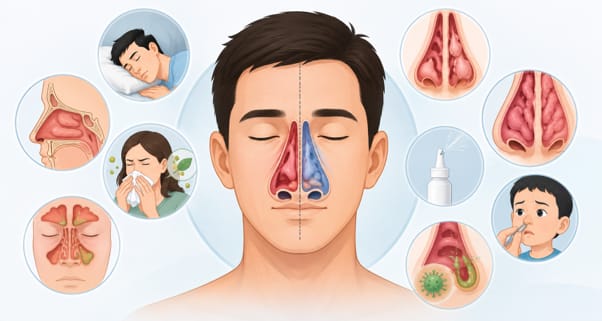
Sometimes the explanation is surprisingly simple. When lying on one side, gravity can increase blood flow to the lower side of the nose, causing temporary swelling.
This can make one nostril feel blocked while resting in bed. The sensation usually improves after changing position or getting up in the morning.
People who already have allergies or nasal swelling may notice this effect more frequently.
Deviated Septum
A deviated septum is one of the most common causes of long-term one-sided nasal blockage. The septum is the wall that separates the two nasal passages.
If this wall is bent or off-centre, one side of the nose may become narrower than the other. This can reduce airflow and create a constant feeling of congestion.
Some people are born with a deviated septum, while others develop it following a facial injury. Depending on the severity, symptoms may include blocked breathing, snoring, and recurring nasal congestion.
Allergies and Nasal Irritation
Allergies can cause the lining inside the nose to become swollen and irritated. Common triggers include dust mites, pollen, pet dander, mould, smoke, and air pollution.
Although allergies often affect both sides of the nose, one side may feel more blocked if it is already narrower due to another issue. Symptoms such as sneezing, itchiness, watery mucus, and frequent congestion often accompany allergy-related swelling.
Reducing exposure to triggers and treating allergies appropriately can often improve symptoms.
Sinus Inflammation or Infection
The sinuses are air-filled spaces connected to the nasal passages. When they become inflamed, drainage can be disrupted, leading to congestion and pressure.
Some people experience blockage that feels more noticeable on one side, especially if the inflammation is concentrated in a particular sinus area. Other symptoms may include facial discomfort, thick nasal discharge, postnasal drip, and a reduced sense of smell.
Persistent sinus problems should be assessed to determine the underlying cause and appropriate treatment.
Nasal Polyps
Nasal polyps are soft, non-cancerous growths that can develop inside the nose or sinuses. They often occur in people with long-term inflammation, allergies, or chronic sinus conditions.
As polyps grow, they can partially block airflow and create a feeling of congestion. Larger polyps may affect breathing, reduce the sense of smell, and contribute to recurring sinus symptoms.
A one-sided polyp should always be assessed by an ENT specialist to ensure an accurate diagnosis.
Enlarged Turbinates
Inside the nose are structures called turbinates that help warm, filter, and humidify the air we breathe. These structures can become enlarged due to allergies, infections, irritants, or environmental changes.
When this happens, airflow through the nose may become restricted. Some individuals notice blockage mainly on one side, particularly if there is already a structural narrowing within the nasal passage.
Treatment depends on the underlying cause of the swelling.
Overuse of Decongestant Nasal Sprays
Decongestant sprays can provide fast relief from a blocked nose. However, using them for longer than recommended can create a cycle where congestion returns once the medication wears off.
This can lead to ongoing swelling inside the nose and worsening symptoms over time. Many people are unaware that the spray itself may be contributing to their persistent blockage.
If you rely on nasal sprays frequently, it is important to seek medical advice.
Foreign Object in the Nose
This cause is more common in children than in adults. Small objects such as beads, toy parts, or food particles can become lodged inside the nose.
A blocked nostril accompanied by a bad smell or unusual discharge may be a warning sign. In these situations, a medical assessment is important to remove the object safely.
Rare but Important Causes
Although uncommon, a persistent blockage affecting only one side of the nose can occasionally be linked to an abnormal growth.
Symptoms such as recurring nosebleeds, worsening blockage, facial swelling, pain, or changes around the eye area should not be ignored. While these symptoms do not automatically indicate a serious condition, they should be evaluated promptly by an ENT specialist.
Symptoms That Can Help Identify the Cause
Questions to Consider
Paying attention to accompanying symptoms can provide useful clues about what may be causing the blockage.
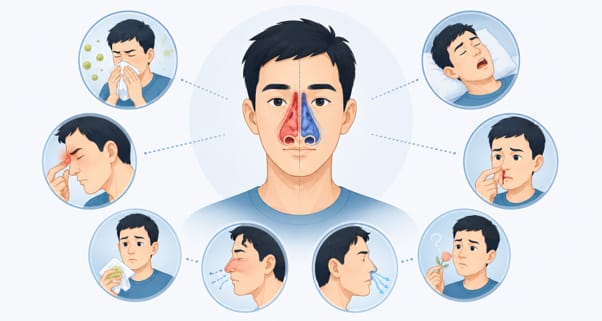
Ask yourself whether the blockage always affects the same side or changes throughout the day. Consider whether symptoms worsen at night, during exercise, or when exposed to certain environments.
It is also helpful to note if you experience sneezing, itching, facial pressure, thick mucus, reduced smell, nosebleeds, or a history of previous nasal injury. Sharing these details with your doctor can support a more accurate assessment.
When Should You See an ENT Specialist?
A blocked nose may be easy to dismiss during a cold, but symptoms that linger for weeks or keep returning should not become something you simply live with. Persistent congestion deserves attention, particularly when it affects your sleep, breathing, or sense of smell.
An ENT assessment is especially important if the blockage stays on the same side, occurs with recurrent nosebleeds or significant facial pain, or develops after a nasal injury. Vision changes, marked swelling or severe breathing difficulties require urgent medical attention.
For ongoing nasal blockage, arrange a consultation with Dr Lim Keng Hua’s ENT clinic in Singapore to have your symptoms assessed and discuss whether nasal endoscopy is suitable for you. Book an assessment through https://drkhliment.com.sg/ent-nasal-endoscopy-nasoendoscopy/
How an ENT Doctor Checks One-Sided Nasal Blockage
Medical History
The first step is understanding your symptoms and medical background. Your doctor may ask about allergies, previous injuries, medications, sinus problems, and lifestyle factors that could be contributing to the issue.
Nose Examination
A careful examination of the nose can reveal swelling, discharge, structural problems, or visible growths. This helps narrow down the possible causes of the blockage.
Nasal Endoscopy
In some cases, a nasal endoscopy may be recommended. This involves using a thin camera to look deeper inside the nasal passages and sinus openings.
The procedure allows the doctor to identify issues that may not be visible during a standard examination, such as polyps, sinus drainage problems, or hidden areas of swelling.
Allergy Tests or Scans
Additional tests may be recommended depending on the findings. Allergy testing can help identify triggers, while imaging scans may be useful when sinus disease or structural abnormalities are suspected.
Treatment Options Depend on the Cause
Simple Home Care
For mild symptoms, simple measures may help improve comfort. Saline nasal sprays or rinses can help clear mucus and keep the nasal passages moist.
Avoiding known allergy triggers and maintaining good indoor air quality may also reduce irritation. Some people find that sleeping with the head slightly elevated improves nighttime congestion.
Medicines
Treatment may include medications that target the underlying cause of the blockage. Antihistamines may be helpful for allergies, while steroid nasal sprays can reduce swelling inside the nose.
If a bacterial infection is present, antibiotics may occasionally be required. Your doctor will determine whether medication is appropriate based on your symptoms and examination findings.
ENT Procedures or Surgery
When symptoms are caused by structural problems or persistent blockage that does not respond to medical treatment, a procedure may be considered.
Examples include correcting a deviated septum, reducing enlarged turbinates, or removing nasal polyps. The goal is to improve airflow, relieve symptoms, and enhance overall quality of life.
What You Should Avoid
Avoid using decongestant nasal sprays for longer than recommended without medical advice. While they may provide short-term relief, prolonged use can worsen congestion.
It is also important not to dismiss ongoing one-sided symptoms as simply allergies or a lingering cold. Persistent blockage deserves proper assessment to identify the true cause.
For children, avoid attempting to remove deep objects from the nose at home, as this may push them further inside and increase the risk of complications.
Conclusion
A blocked nostril is not always a sign of a serious problem. In many cases, it may simply be part of the normal nasal cycle or caused by temporary swelling from allergies or irritation.
However, when one side of the nose remains blocked for weeks or repeatedly causes symptoms, it is worth investigating further. Common causes include a deviated septum, sinus inflammation, nasal polyps, enlarged turbinates, and allergies.
An accurate diagnosis is the key to effective treatment. If one-sided nasal blockage is affecting your breathing, sleep, or daily comfort, an ENT assessment can help identify the cause and guide the most appropriate treatment plan.